
What About Me?
Class, recognition, and what the gospel offers the people who have disappeared from the story


Several years ago, I found myself in conversation with a homeless man who had once been a taxi driver.
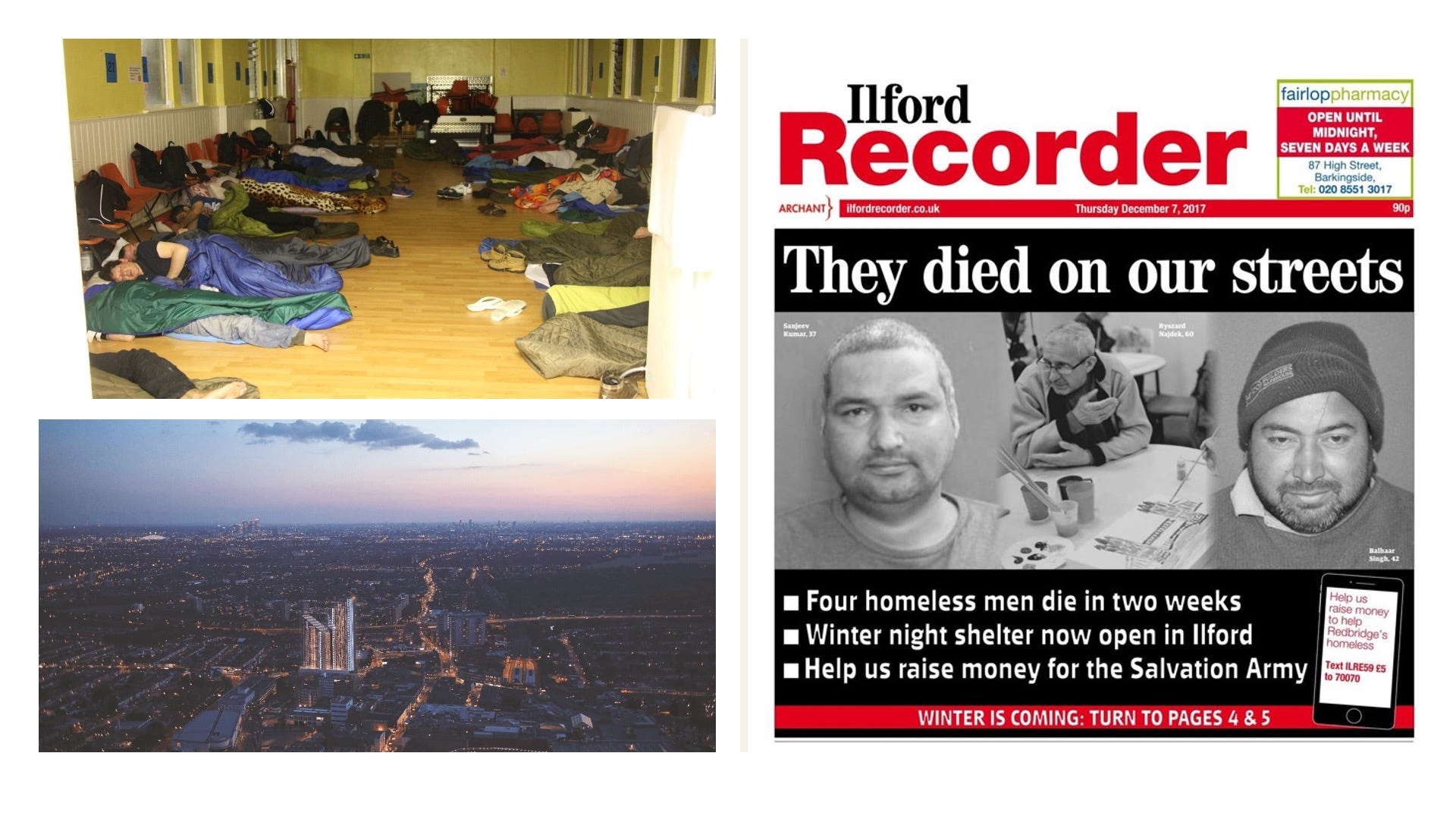
Earlier that evening, our team had been celebrating progress on a project that would eventually transform the work of a winter night shelter we ran from the upper floor of a Salvation Army building.
The people using the shelter were remarkably diverse: roughly a third of the men were British, another third Eastern European, and another third Punjabi men caught in complex immigration and residency processes. Many had become trapped between institutions. Some needed help finding work. Others were trying to regularise their status or return home. Progress was painfully slow.
When your pillow is made of concrete, it is difficult to navigate systems that require appointments, paperwork, patience, and hope. The new project aimed to address that problem. By providing accommodation, we could give people the stability needed to engage with these processes and, hopefully, move forward with their lives.
It was a good project. It deserved the energy and enthusiasm surrounding it.
But sitting in the midst of that excitement was the former taxi driver.
Unlike most of the British men who came through the shelter, he had not moved on. For a complicated mixture of personal and structural reasons, he remained stuck. In practice, he had become as excluded from meaningful support as many of the men we were trying to help.
I remember him looking at me and saying:
“This isn’t going to help me, is it? What about me?”
There was an anger in his voice. But looking back, I do not think he was primarily asking for housing.
He was asking for recognition.
It was not that he objected to the help offered to others. Rather, the visibility of their suffering and our obvious response to it threw into sharper relief the fact that his own had become unremarkable. What troubled him was the growing suspicion that he no longer appeared in the story at all.
And in an important sense, he was right.
At that moment he was largely invisible: to me, to those around me, and to the institution I represented.
The question stayed with me. Not because I agreed with everything he thought, nor because he represented an entire social class, but because, over the years since, I have heard versions of that same question again and again.
What about me?
Years later, I found myself thinking about that conversation again while reading the latest Sutton Trust research on educational opportunity and social mobility.
One conclusion was stark: white working-class children remain among the most disadvantaged groups in England. The report highlights persistent educational underachievement, weak social mobility, and profound geographical inequalities, particularly in places that have experienced long-term economic decline. It also notes that despite repeated inquiries and policy attention, progress has been limited. The problem is widely recognised. It remains stubbornly unresolved.

Perhaps most strikingly for me, the report found that white working-class children in Newcastle now face some of the poorest life opportunities anywhere in England. As someone now serving in the North East, I found that difficult to ignore. Behind the statistics lie real communities, real families, and real places that are increasingly disconnected from the opportunities and institutions that shape national life.
The taxi driver was not speaking about educational attainment. Yet there is a resemblance between his question and the realities described by the report.
Both point towards a particular group that often experiences itself as left behind.
Of course, material disadvantage is not unique to the white working class. Nor should concern for one disadvantaged group diminish concern for another. My ministry as a Salvation Army officer has taught me that clearly enough.
Yet the Sutton Trust data raises a legitimate question. If a group continues to experience significant disadvantage, why does discussion of that disadvantage so often feel awkward, contested, or politically volatile?
Why do conversations about white working-class communities so quickly become arguments about immigration, Brexit, populism, privilege, or culture wars?
Axel Honneth offers a useful way of thinking about this.
His core claim is that people become capable of flourishing only through forms of recognition secured in social relations and institutions. We need to know that we are seen, that we matter, and that we have a place within the moral life of society. This, he argues, is not reducible to material resources.
Honneth identifies three main forms of recognition. Love names the experience of being valued and cared for in ways that sustain agency and confidence. Rights refers to being recognised as an equal participant in society, with a voice that deserves to be taken seriously, and equal standing before institutions. Solidarity concerns social esteem: being valued for one’s capacities, labour, culture and contribution to common life.
When these forms of recognition are absent, people experience what Honneth calls misrecognition. They may feel invisible, ignored, patronised, or treated as though their lives no longer matter.
This does not mean material disadvantage is unimportant. Quite the opposite. But Honneth suggests that social conflicts are often about more than money. They are also struggles over dignity, belonging, and visibility.
The Sutton Trust findings suggest that many white working-class communities experience deficits across all three spheres. The relationships and opportunities through which confidence is formed are often fragile. Institutions are frequently distant and unresponsive. And many people carry the experience that the places, occupations, accents and traditions that shaped them are regarded with indifference or contempt.
Viewed through that lens, the taxi driver’s question — “What about me?” — begins to sound rather different.
He is asking whether he counts.
In Honneth’s terms, the wound is not only poverty but misrecognition: the experience of believing that institutions, media, charities, churches and political leaders can see everybody except people like you.
While speaking at The Salvation Army’s European Communications Network gathering in Rome, I suggested that many institutions increasingly face a set of questions that are rarely voiced directly: Do you see us? Do you understand what life is like here? Can we trust you? Looking back, I realise that the taxi driver was asking a version of the same question.
Honneth is helpful because he illuminates why experiences of invisibility and disregard can generate deep resentment. Yet recognition alone cannot be the basis of a healthy society. The challenge is not merely to recognise competing identities but to rebuild forms of common life in which different groups can recognise one another as participants in a shared story.
The taxi driver was not asking to become the centre of the story; he was asking not to disappear from it.
The question raised by the taxi driver is therefore not merely sociological or political. It is also theological. Christian communities frequently speak about poverty, exclusion and marginalisation. Yet there has been surprisingly little attention paid to whether significant sections of the white working class experience churches as places that recognise them, speak their language and take their lives seriously. I believe churches do care about working-class communities. The question is whether that care is felt, understood, and trusted.
But Christianity ultimately offers something more demanding than recognition, and the Church must resist the temptation to treat society as a marketplace of rival grievances, each competing for moral attention.
The New Testament’s answer to social fragmentation is not mutual visibility alone but communion. It is the creation of a people who discover that their deepest identity is not found in race, class, sexuality, education, occupation, or political tribe, but in their common participation in Christ.
Each person comes to Christ carrying different experiences, wounds, privileges and disadvantages. Yet beneath these differences lies something more fundamental. We are all sinners in need of grace. The Christian gospel begins not with the assertion of our distinctiveness but with the confession of our shared condition. At the foot of the Cross, none of us stands above another.
The Church therefore does not gather as a set of rival claims upon attention, but as a people who have first been transformed by God — ransomed, healed, restored, forgiven. In Christ, those who were strangers become neighbours, those who were divided become one body, and those who feared exclusion discover that they belong. Christianity announces that the person asking, “What about me?” is on the same ground as everyone else: a sinner in need of grace and a person for whom Christ died, whose dignity does not depend upon social recognition, educational attainment, cultural status, or economic success.
This is why the Church is called to cultivate communities in which fewer people feel compelled to ask, “What about me?” because they already know they are invited to belong to Christ and be changed by him. That is the deeper challenge posed by the taxi driver’s question.
May our churches be communities capable of saying to the taxi driver, “You are not outside the story.”
And perhaps more importantly, communities capable of saying the same to everyone else who notices when they have been forgotten.
Thanks John. A pertinent reminder to do what we do best - love indiscriminately.
The taxi driver asked "what about me" because he was hoping/expecting someone to solve some of his pressing problems. Pay the bills, find a job, get better housing, etc. I think it's as simple as that. And because we couldn't help him then he didn't feel valued. On the basis that we can't solve everyone's problems then most people won't feel valued because we didn't solve their problems. Unless we make the kingdom of God about finding Jesus instead of about solving human problems. If salvation looks like solving a human need then we will have fallen into the trap written about by Booth in Darkest England. "a well dressed, well fed and clean man who has not yielded his life to the living God is still destined for hell"(my paraphrasing). Saved to save... Not saved to serve. Yes.... Booth also said that "how can a hungry person hear the gospel unless we feed them first" but he was talking about people who were so hungry they were going to die, not ones who had misspent their benefits and needed a handout before their next giro.
Thank you John for reminding us again of what God's kingdom looks like and why this is our priority. May God help me live this out where he's placed me, showing kindness in whatever way I can to make others feel valued and then invite them to meet Jesus.